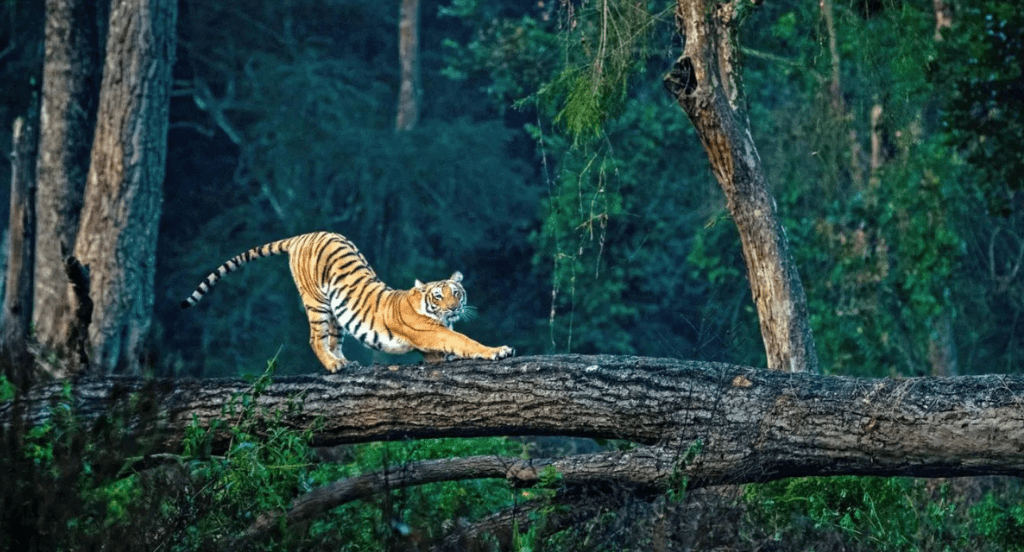
Best Tiger Reserve in Central India: Kanha, Bandhavgarh, or Pench?
Central India’s pristine deciduous forests and vast meadows are the real-world setting that inspired Rudyard Kipling’s iconic The Jungle Book. Today, this region forms the epicenter of tiger conservation globally, boasting some of the highest densities of wild Bengal Tigers on earth.
For international wildlife enthusiasts and professional photographers planning a luxury safari in India, three legendary parks consistently stand out: Kanha National Park, Bandhavgarh National Park, and Pench Tiger Reserve.
Since each park offers a completely distinct landscape, terrain, and safari experience, a common dilemma arises: Which one should you choose?
As an elite luxury India tour operator, Epic Indian Travel manages premium safari expeditions across Madhya Pradesh. In this comprehensive comparison guide, we break down the unique highlights, terrain dynamics, and tiger-sighting probabilities of Kanha, Bandhavgarh, and Pench to help you select your perfect safari destination.
Central India Tiger Reserves: Comparative Overview
To help you understand the core differences at a glance, here is a breakdown of how these three premier reserves stack up against each other:
| Feature | Kanha National Park | Bandhavgarh National Park | Pench Tiger Reserve |
|---|---|---|---|
| Landscape / Terrain | Massive sal forests, expansive bamboo forests, and open meadows. | Rugged rocky hills, mixed forests, and an ancient hilltop fort. | Open canopy forests, grassy meadows, and the scenic Pench River. |
| Tiger Density | Medium to High (Spread across a vast, massive territory). | Extremely High (High concentration in a smaller area). | High (Highly active, open visibility zones). |
| Unique Wildlife Beyond Tigers | The rare Hardground Barasingha (Swamp Deer) saved from extinction. | Indian Leopards, Sloth Bears, and rich avian biodiversity. | Large herds of Indian Gaur (Bison), Jackals, and Wild Dogs (Dholes). |
| Kipling Connection | The visual inspiration for The Jungle Book’s landscapes. | Mentioned in ancient texts; deeply historical landscape. | The exact geographical location where the story of Mowgli is set. |
1. Kanha National Park: The Majestic and Vast Wilderness
Kanha is widely regarded as one of the best-managed national parks in Asia. It is a massive, sprawling ecosystem that offers an unparalleled sense of deep wilderness.
- The Landscape: If you want to see sweeping vistas, massive grasslands, and towering Sal trees, Kanha is magnificent. The misty mornings in Kanha’s meadows are a dream for landscape photographers.
- The Safari Experience: Because the park is vast, tracking tigers here requires real tracking skill. Listening to alarm calls of deer and tracking fresh pugmarks with an expert naturalist makes the safari thrilling.
- Best For: Travelers seeking a raw, majestic forest experience, landscape photography, and viewing the exclusive Barasingha deer.
2. Bandhavgarh National Park: The Land of Royal Forts & High Tiger Density
If your primary, uncompromised goal is to see a wild Bengal Tiger up close, Bandhavgarh should be at the absolute top of your itinerary.
- The Landscape: Dominated by a massive, 2,000-year-old ancient fort hill right in the center of the park, Bandhavgarh features dramatic rocky terrains, steep cliffs, and dense swampy valleys.
- The Safari Experience: Bandhavgarh has historically recorded one of the highest densities of royal Bengal tigers in India. Because the core tourist zones are relatively compact, the probability of encountering a tiger here during a 2 to 3-day stay is exceptionally high.
- Best For: Professional wildlife photographers, first-time safari travelers anxious for a guaranteed sighting, and history lovers.
3. Pench Tiger Reserve: The Open Forest & Easy Accessibility
Pench is a beautiful, open-canopy forest that offers incredible visibility and a highly active predator-prey ecosystem.
- The Landscape: Characterized by rolling hills and open dry-deciduous forests, Pench is split by the beautiful Pench River. The lesser undergrowth means spotting wildlife sitting far away from the safari tracks is much easier.
- The Safari Experience: Pench is exceptionally rich in herbivores, meaning you will witness massive herds of spotted deer, langurs, and Indian Bison. It is also one of the best places in Central India to spot the elusive Indian Leopard and packs of Indian Wild Dogs (Dholes).
- Best For: Travelers flying into Nagpur airport looking for quick, seamless logistics, and families looking for diverse wildlife sightings beyond just tigers.
The Master Strategy: Experience the Central India Safari Circuit
For a premium international holiday, you do not have to limit yourself to just one park. Because these reserves are geographically connected across the state of Madhya Pradesh, the ultimate wildlife holiday involves linking them together in a seamless road circuit.
Traveling between these parks via a private luxury AC SUV allows you to experience how the forest changes from the dense, misty meadows of Kanha to the dramatic, rocky cliffs of Bandhavgarh.
Explore our expert-curated wildlife itineraries designed for high-end international travelers:
- Through the Lens — Central India Wildlife Photography Safari (09 Nights / 10 Days)
- Heart of the Jungle — Central India Wildlife Safari (13 Nights / 14 Days)
- Offbeat Central India Tiger Safari — Tadoba, Pench & Satpura (12 Nights / 13 Days)
Frequently Asked Questions (FAQs)
Q1. When is the absolute best time to go on a tiger safari in Central India?
Ans: The safari season runs from October 15th to June 30th (the parks close during the monsoon season). For the best photography and highest tiger sightings, March to May is ideal. As water holes dry up, tigers frequently visit the remaining water sources to cool down, making them highly visible. However, if you prefer pleasant, cool weather, November to February is exceptionally beautiful.
Q2. How far in advance do international tourists need to book India safari permits?
Ans: You must book at least 90 to 120 days in advance. The Government of India strictly limits the number of safari vehicles allowed inside the core zones of Kanha, Bandhavgarh, and Pench every day to protect the habitat. Premium zones sell out almost immediately once the online booking window opens.
Q3. Which airport should international travelers fly into for a Central India safari?
Ans: The most strategic gateway is Nagpur International Airport (NAG). It is extremely well-connected by short internal flights from New Delhi and Mumbai. From Nagpur, Pench is just a 2.5-hour drive, Kanha is about 5 hours, and Bandhavgarh can be reached via a beautiful drive or an interconnected internal route.
Q4. What is the difference between a Central India safari and an African safari?
Ans: While African safaris are mostly conducted in massive, wide-open savannahs where wildlife is visible from miles away, Indian safaris take place in dense, enchanting subtropical forests. Tracking a tiger involves an intense, sensory experience of listening to langur and deer alarm calls, following track marks, and navigating thick jungle foliage, making the eventual sighting incredibly rewarding.